🌍 Can One Country Give Nuclear Weapons to Another? Exploring the Case of Russia and Iran
Let’s explore this question from legal, political, and strategic perspectives.
INTERNATIONAL POLITICS
6/25/20252 min read
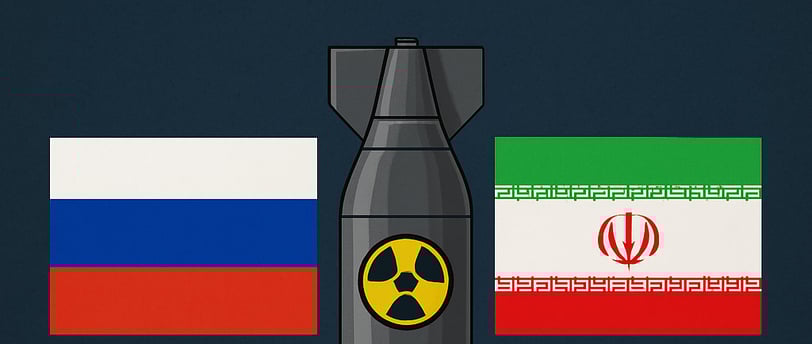
The topic of nuclear weapons transfer between countries has always stirred intense debate, driven by concerns of global security, international law, and geopolitical strategy. A question often asked in this context is: Can a nuclear-armed country, like Russia, give nuclear weapons to a non-nuclear country, such as Iran?
Let’s explore this question from legal, political, and strategic perspectives.
⚖️ Legal Barriers: What the NPT Says
The Treaty on the Non-Proliferation of Nuclear Weapons (NPT) is the cornerstone of global nuclear arms control. It classifies countries into:
Nuclear-Weapon States (NWS): The U.S., Russia, China, the UK, and France
Non-Nuclear-Weapon States: All others, including Iran
Under the NPT:
NWS are prohibited from transferring nuclear weapons or control over them to any non-nuclear state.
Non-nuclear states are forbidden from receiving or attempting to acquire nuclear weapons.
Therefore, Russia is legally barred from giving nuclear weapons to Iran. Doing so would be a blatant violation of international law and the NPT, leading to global condemnation and serious consequences.
🌐 Political Fallout: A Global Crisis in the Making
If Russia were to transfer nuclear weapons to Iran:
It would likely trigger international sanctions, not only from the West but also potentially from neutral countries concerned about nuclear proliferation.
It could provoke military retaliation — especially from Israel or the United States, both of whom have warned against Iran developing or acquiring nuclear arms.
It might spark a regional arms race in the Middle East, with countries like Saudi Arabia seeking to develop or acquire their own nuclear deterrents.
In short, such a move would throw global diplomacy into chaos and severely damage Russia’s standing.
🧠 Strategic Dangers: More Than Just Politics
Transferring nuclear weapons is not only illegal but highly risky:
Nuclear weapons are complex systems, integrated with highly secure command-and-control technologies. Handing them over means losing control.
There is always the risk of accidental use, theft, or escalation, especially if the receiving country lacks advanced safeguards.
It could backfire on Russia by destabilizing the region and bringing conflict closer to its own borders.
🔌 What Actually Happens: Civilian Cooperation, Not Weapons Transfer
While Russia has cooperated with Iran on civilian nuclear programs (e.g., the Bushehr power plant), this collaboration is under international safeguards and IAEA inspections.
This allows Russia to maintain economic and diplomatic ties with Iran without crossing the red line of nuclear weapons proliferation.
🧾 Conclusion: No, Russia Can’t (and Won’t) Give Nukes to Iran
While a country could technically transfer nuclear weapons, in practice, it is:
Illegal under international law (NPT),
Disastrous in political and diplomatic terms, and
Strategically reckless for global and regional security.
Thus, Russia giving nuclear weapons to Iran is not just unlikely — it would be an act of global destabilization. Despite tensions and alliances, the world’s nuclear order remains largely intact because even major powers understand the catastrophic consequences of violating it.
© 2025. All rights reserved.